



Pergola Without Regret – Your Guide to Building Permits in Switzerland
A pergola is a fantastic project and greatly enhances a garden. However, in Switzerland, one often runs into „red tape“ when building. Since the Building law in Switzerland is a cantonal matter (and often even a community matter), there is no one-size-fits-all solution – but there is a clear framework you can use for your Construction permit orient yourself.
The million-dollar question: Does a pergola require a permit?
In Switzerland, the general rule is: Almost everything that is firmly connected to the ground or changes the appearance of the place requires a permit. Whether you want to Building permit for your pergola depends on the construction method:
-
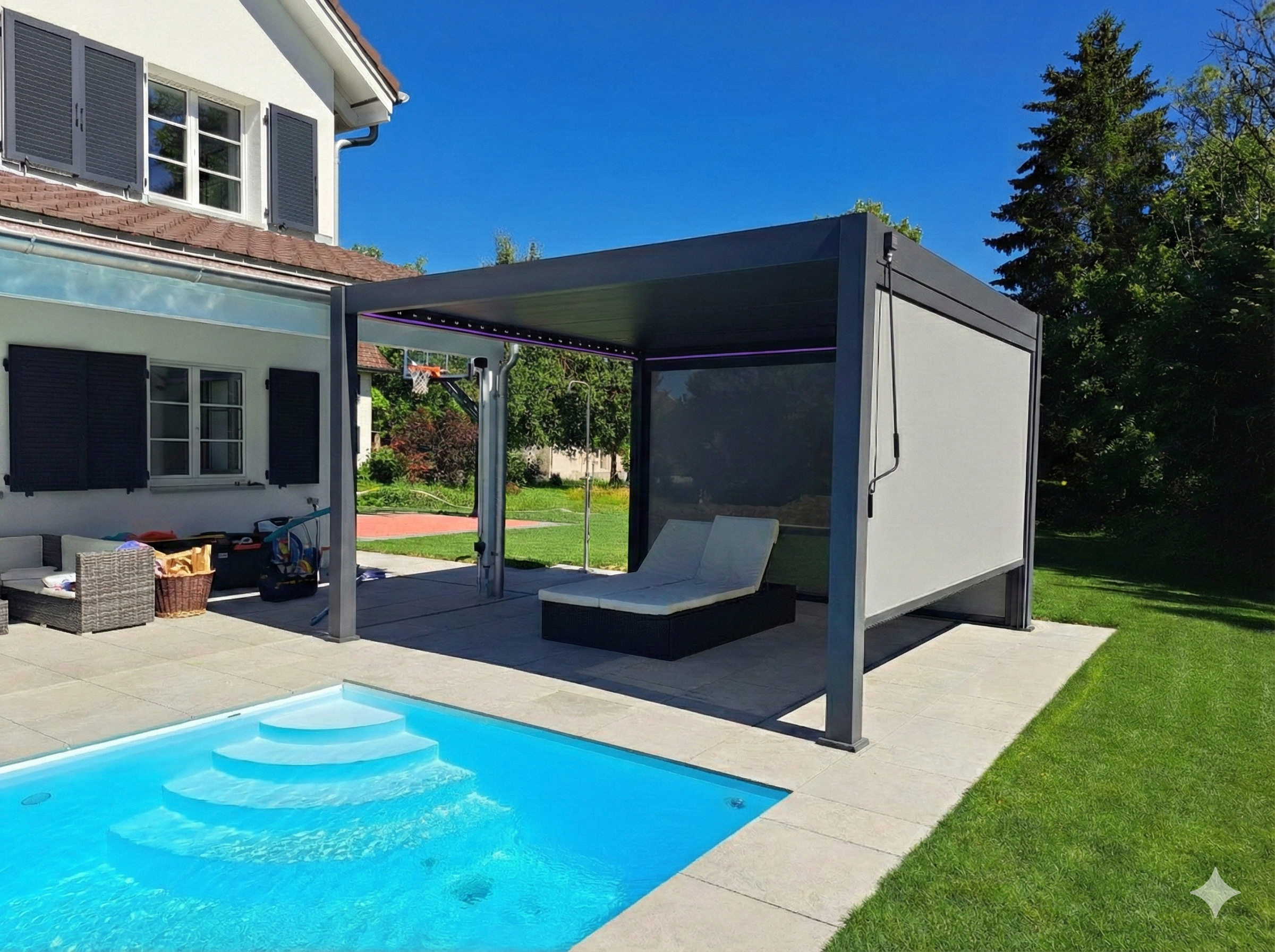
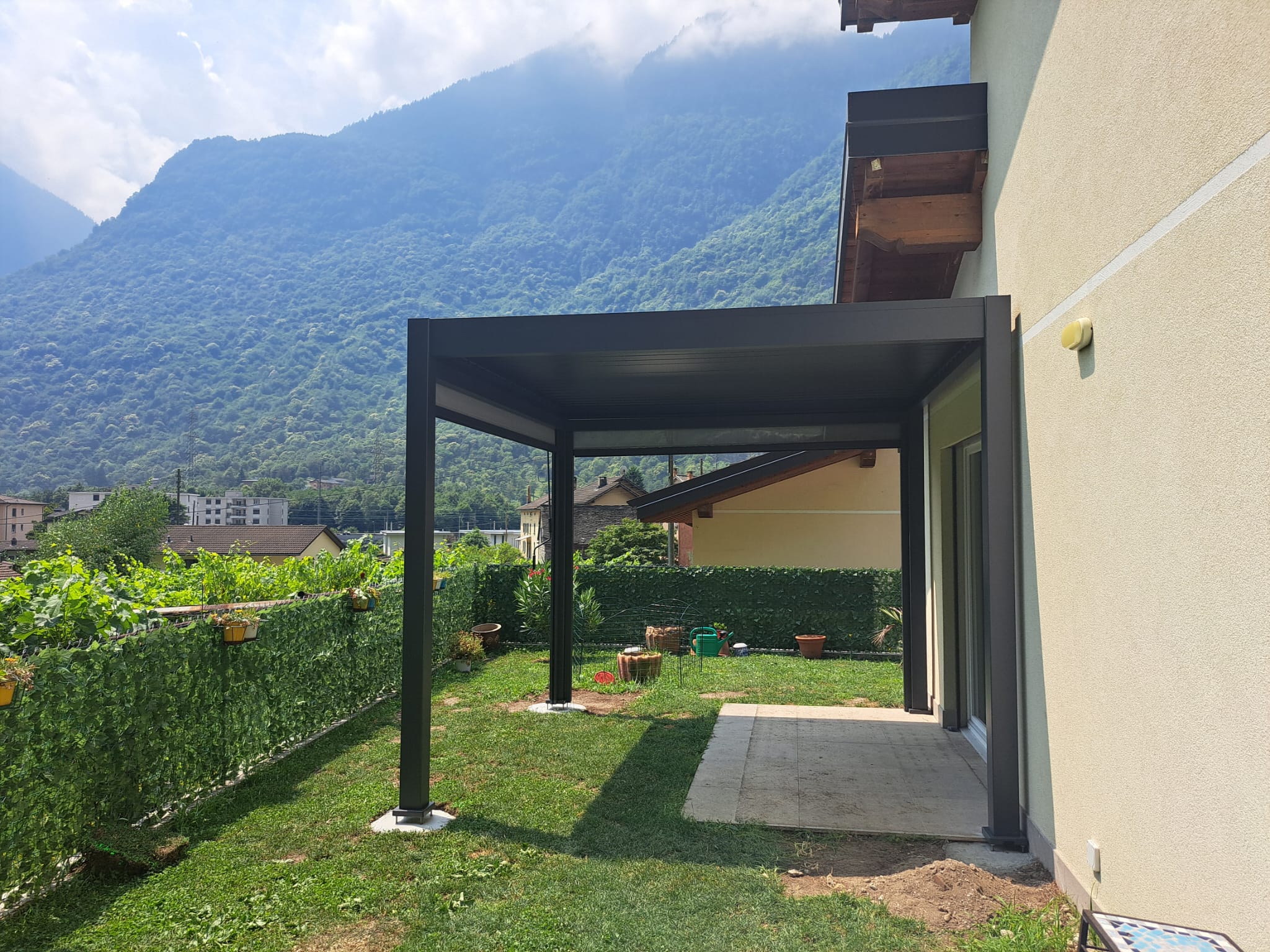
Attached Pergola If it's attached directly to the house, it's usually considered a facade alteration. The approval requirement is very high here.
-
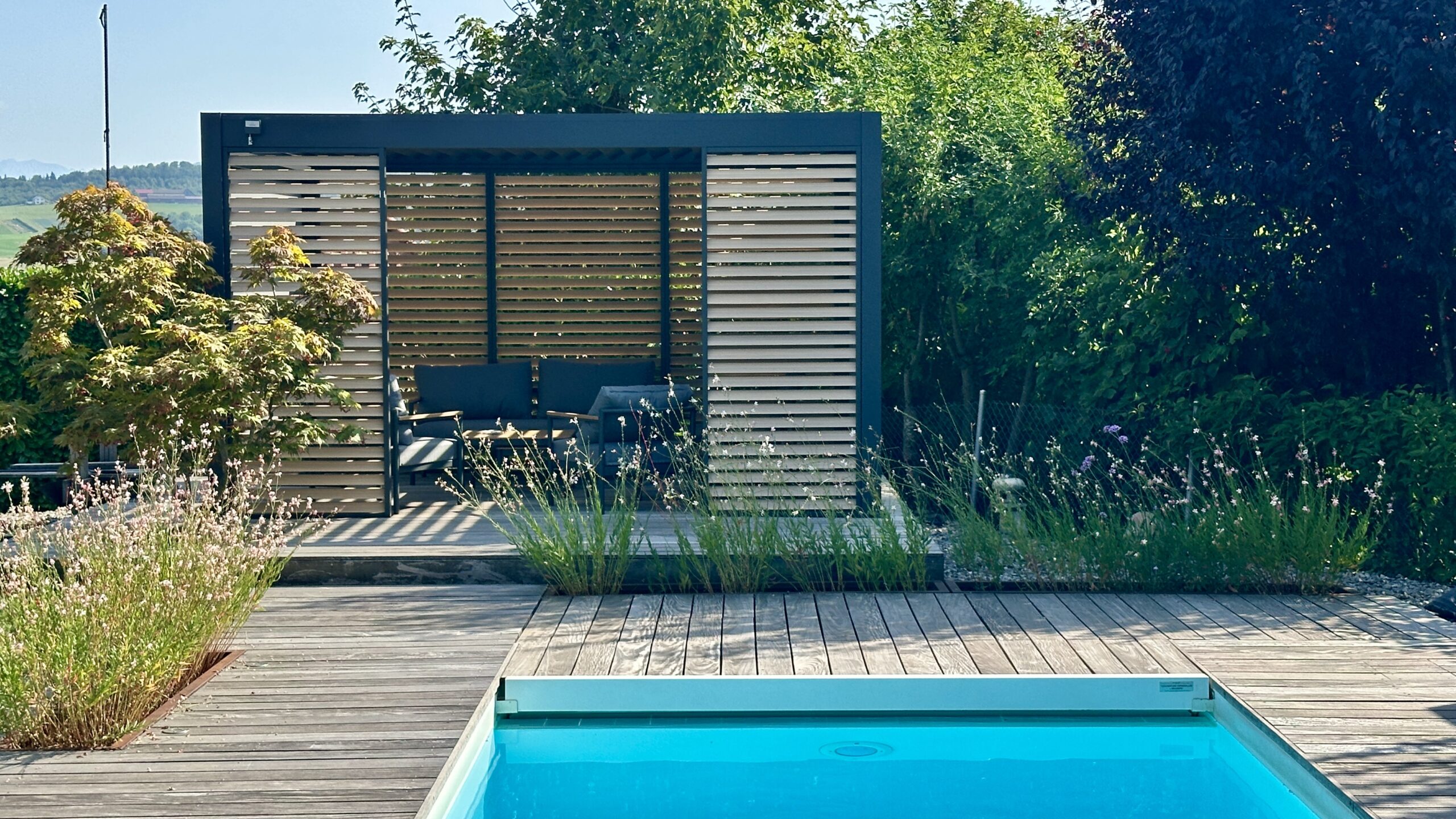
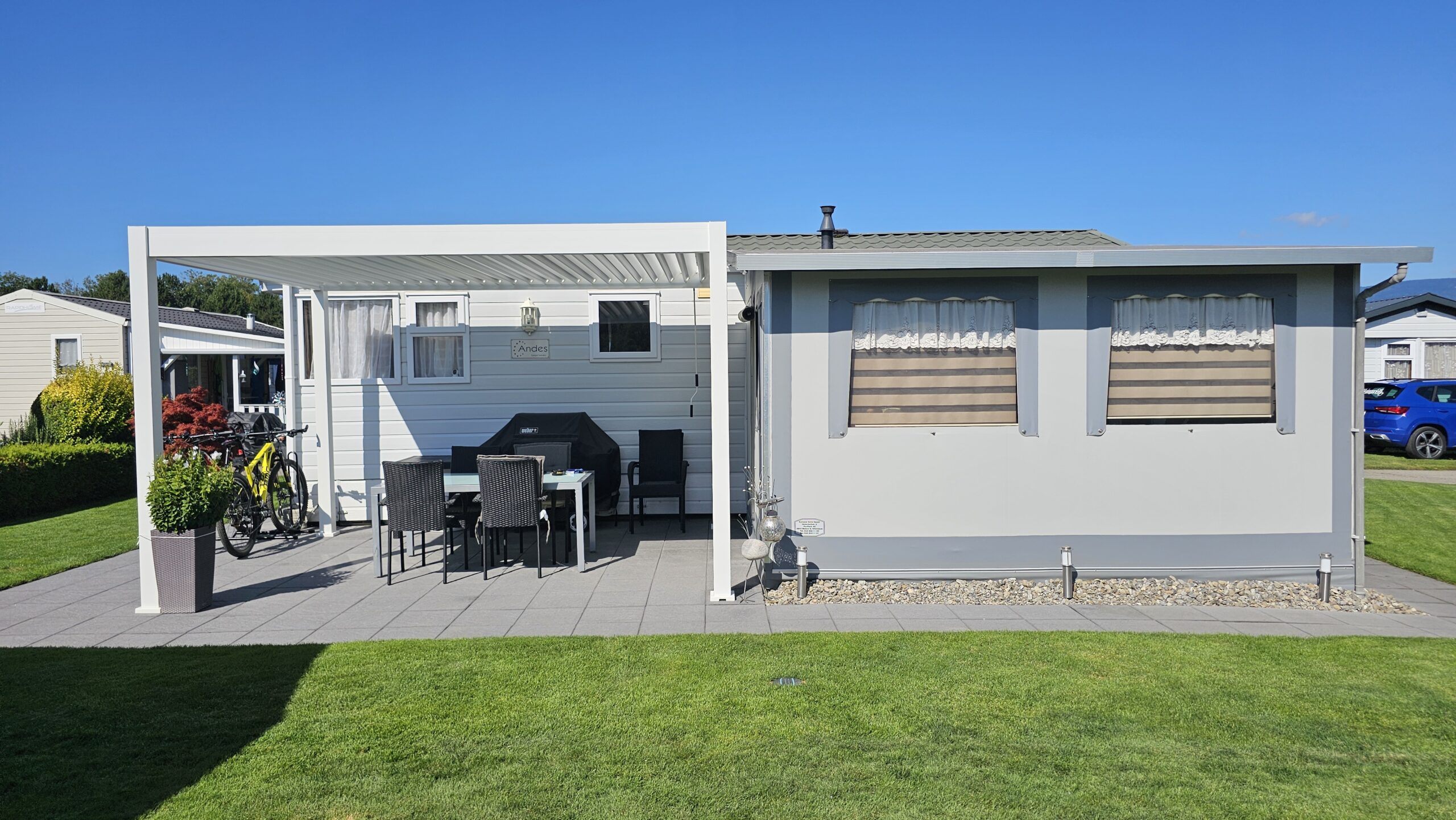
Freestanding pergola This is often classified as an „ancillary structure“ and is subject to less stringent rules.
-
The „triviality threshold“ Some cantons allow small buildings up to a certain floor area (e.g., under 10 m²) or height without extensive procedures.
Pro Tip: A quick call to your municipality's building department can save weeks of misplanning. The employees are usually more helpful than you might think!
2. The Procedure: Ordinary or Simplified?
Depending on the project, it comes down to one of these two methods:
-
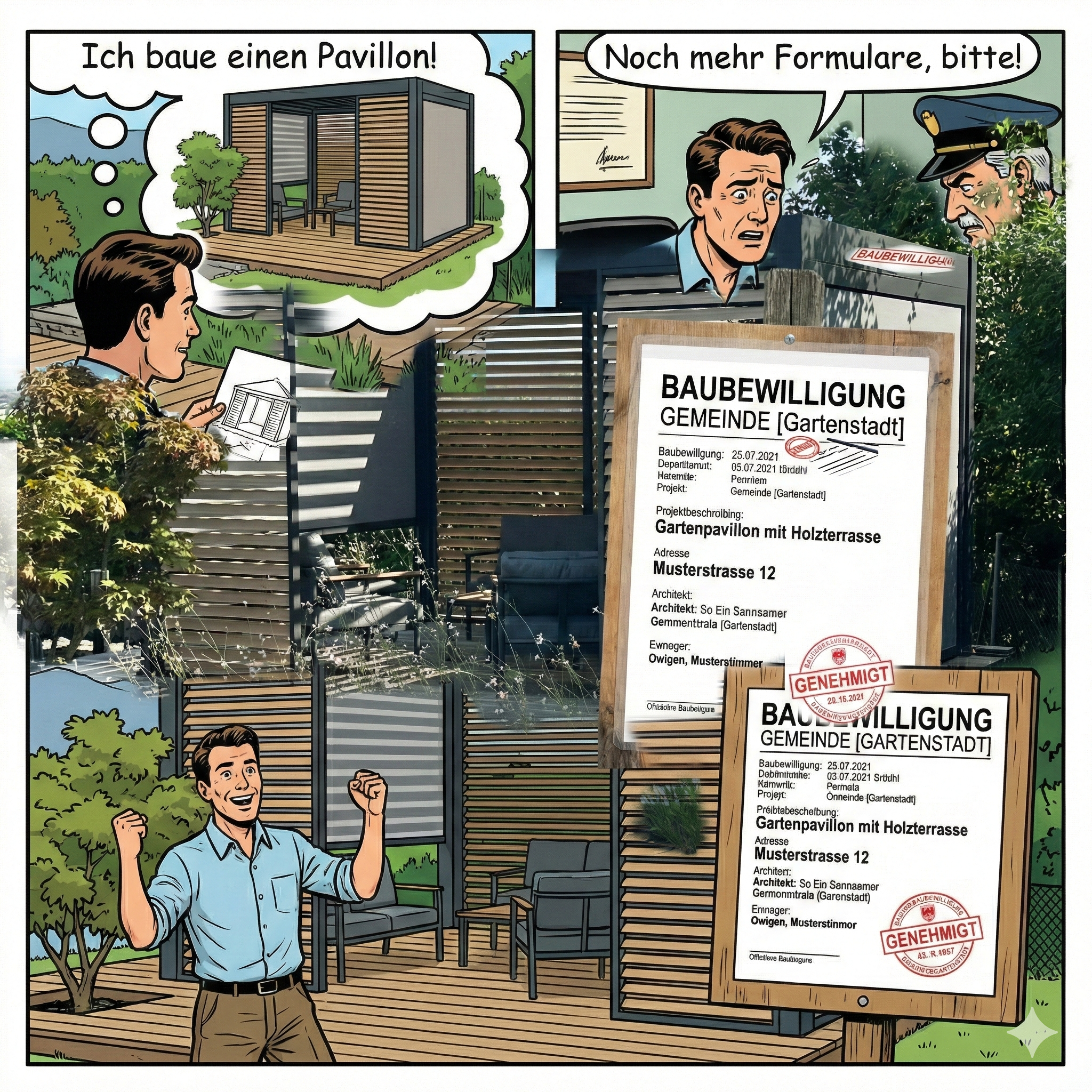
Display Procedure / Simplified Procedure This is the fastest way (approx. 2-4 weeks). There is no public publication in the official gazette. This is often possible if no neighbor interests are violated.
-
Due process With public display and the famous „unplugging“ of the plans (construction hoardings). This process usually takes 2-3 months.
3. Checklist: What belongs in the building permit application file?
To the Building permit for your pergola in Switzerland To obtain it, you usually need to submit the following documents in triplicate:
-
Building Permit Application Form The official document of your municipality.
-
Current Cadastral Plan: An excerpt from the surveyor's report, in which the pergola is drawn to scale.
-
Project Plans (Scale 1:100): Floor plans, sections, and elevations.
-
Building description Details on material (wood, aluminum), color, and roofing (open, glass, louvers).
-
Photos Pictures of your garden's current condition.
4. Stolpersteine: Boundary Distances and Fire Protection
Before you start, you should check these three points:
-
Boundary distances How close can you build to your neighbor's fence? This often ranges from 2 to 3.5 meters depending on the canton.
-
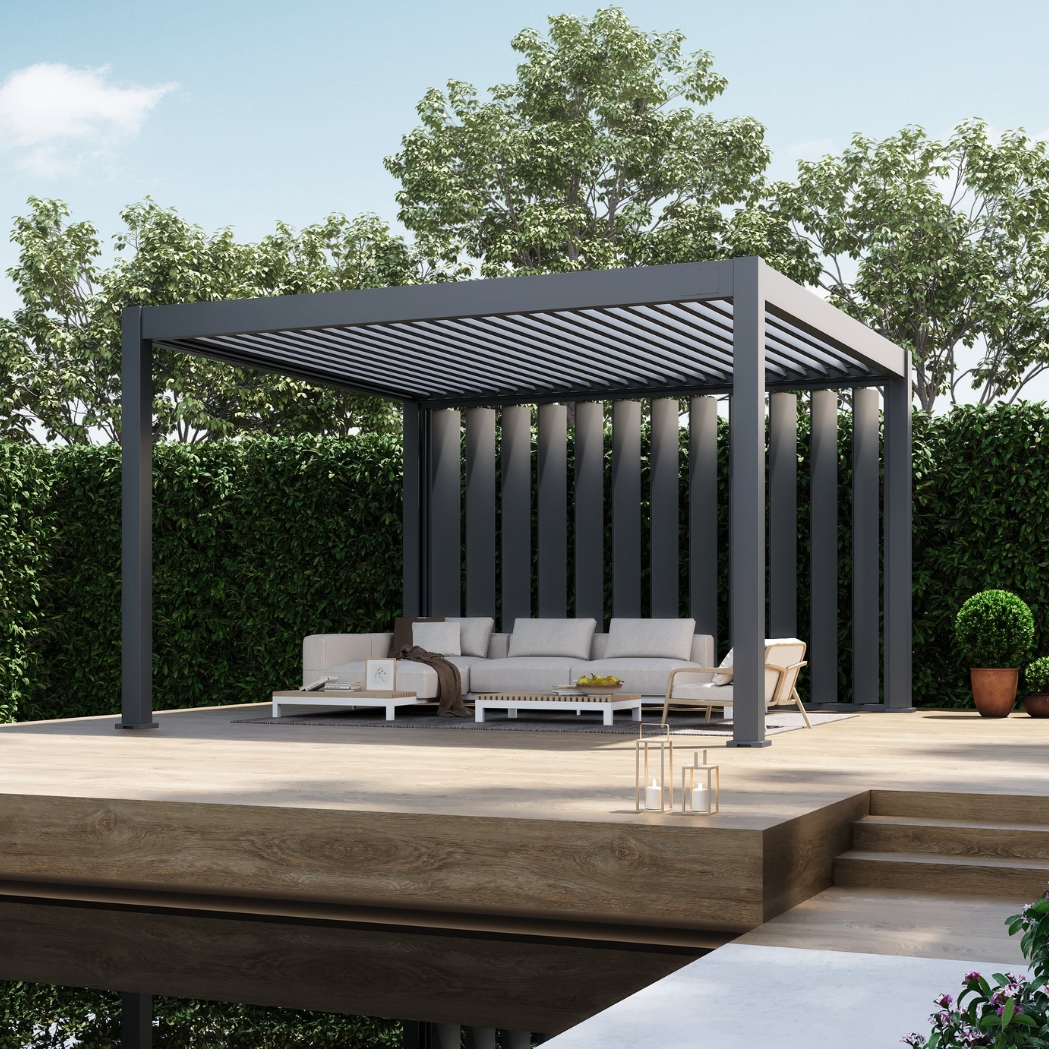
Utilization factor If the pergola has a solid roof (e.g., made of glass), it often counts towards the chargeable building area. A pergola open at the top usually does not.
-
Fire protection Especially important for buildings directly on the property line or on the house.
5. Cantonal Peculiarities (Links)
Since the details vary, here are the portals for the largest cantons for more information:
-
Canton of Zurich: Building in the canton of Zurich
-
Canton of Bern Building Law and Permits BE
-
Canton Aargau: Building law in the canton of Aargau
-
Canton of Lucerne: Building and Living LU
Conclusion: Ask first, then build
Anyone who builds without a permit risks demolition in the worst-case scenario. The fees for a simple permit are often only between 100 and 500 CHF – money well spent for peaceful sleep and many relaxing hours under your new pergola.